Milling Ops: Flour color and ash considerations | 2020-08-14
عمليات الطحن: اعتبارات لون الدقيق ونسبة الرماد
©KOLESNIKOVSERG - STOCK.ADOBE.COM
08.14.2020
Flour color is an important consideration in wheat and flour quality assessment. In the production environment, flour streams and grades are frequently examined visually using a flour slick and a Pekar test. Visual examination is subjective in nature and influenced by the lighting available in the mill as well as personal perception. Laboratory equipment using sophisticated technologies and following exacting procedures is often employed to reduce subjectivity and provide definitive and repeatable measures of flour color.
يُعد لون الدقيق اعتبارًا مهمًا في تقييم جودة القمح والدقيق. في بيئة الإنتاج، يتم غالبًا فحص استريمات وأنواع الدقيق بصريًا باستخدام شريحة دقيق واختبار بيكار. يُعتبر الفحص البصري إجراءً ذاتيًا بطبيعته، ويتأثر بالإضاءة المتوفرة في المطحن وكذلك بالإدراك الشخصي للفاحص. ولتقليل العنصر الذاتي وتوفير قياسات دقيقة وقابلة للتكرار للون الدقيق، غالبًا ما يُستخدم في المختبرات معدات تعتمد على تقنيات متطورة وتتبع إجراءات دقيقة وصارمة.
Many wheat crop reports utilize these instruments to measure and report flour color, an important quality measure for millers and their customers. Tristimulus color measure of flour is a numerical system to measure a sample’s lightness (L*) on a scale of 0 to 100 and “chromaticity,” or hue, on two scales each running from -60 to +60 for green-red (a*) and blue-yellow (b*). High L* values indicate a bright color, and higher b* values indicate more yellow. Flour color is influenced by the wheat’s endosperm color, particle size and flour ash content often affecting the color of the finished product.
Flour particle size is an important factor in both the perception and measurement of flour color. In some flow sheets, two flours may be separated using two different sets of flour cloth in series. The two flour streams generated may have remarkably similar ash contents but appear quite different in terms of color observed or measured. For example, the first or top flour separated Coarse Sizings (R1) Fine Sizings (R2,) 1 Middlings (C1) and 2 Middlings (C2) had ash contents of 0.36%, 0.33%, 0.29% and 0.29%, respectively. The second or bottom flour separated had ash contents of .033%, 0.33%, 0.28% and 0.30%, respectively. Most often the first or top flour removed is finer and whiter than the second flour removed, which is coarser and appears darker both visually and when measured using various color measurement instruments.
تستخدم العديد من تقارير محاصيل القمح هذه الأجهزة لقياس والإبلاغ عن لون الدقيق، وهو مقياس مهم للجودة بالنسبة للمطاحن وزبائنهم. يُعد قياس اللون الثلاثي (Tristimulus) لنماذج الدقيق نظامًا رقميًا لقياس درجة سطوع العينة (L*) على مقياس من 0 إلى 100، وقياس "اللون"، أو درجة التشبع اللوني، على مقياسين يمتدان من -60 إلى +60، أحدهما للأخضر-الأحمر (a*) والآخر للأزرق-الأصفر (b*). تشير القيم العالية للـ L* إلى لون أكثر إشراقًا، وتشير القيم الأعلى للـ b* إلى ازدياد في درجة الاصفرار. يتأثر لون الدقيق بلون اندوسبرم القمح، وحجم الجزيئات، ومحتوى الرماد، وهي عوامل غالبًا ما تؤثر على لون المنتج النهائي.
يُعد حجم جسيمات الدقيق عاملًا مهمًا في كل من إدراك اللون وقياسه. في بعض مخططات التدفق، قد يتم فصل نوعين من الدقيق باستخدام مجموعتين مختلفتين من شرائح الدقيق على التوالي. قد تكون استريمات الدقيق الناتجة متشابهة بشكل ملحوظ في محتوى الرماد، لكنها تختلف بشكل واضح من حيث اللون سواء بالملاحظة البصرية أو عند القياس باستخدام أدوات قياس اللون المختلفة. فعلى سبيل المثال، فإن أول نوع من الدقيق المُفصول من مراحل "الفصل الخشن" (R1)، و"الفصل الناعم" (R2)، و"السميد الأول" (C1)، و"السميد الثاني" (C2) كانت محتويات الرماد فيها 0.36%، 0.33%، 0.29%، و0.29% على التوالي. أما النوع الثاني أو السفلي من الدقيق المُفصول، فكانت محتويات الرماد فيه 0.33%، 0.33%، 0.28%، و0.30% على التوالي. وغالبًا ما يكون النوع الأول أو العلوي من الدقيق المفصول أدق وأنصع بياضًا من النوع الثاني المفصول، الذي يكون أكثر خشونة ويبدو أغمق سواء عند رؤيته بصريًا أو عند قياسه باستخدام أدوات قياس اللون المختلفة.
Flour color visual assessment and measurement is challenging because of particle size. When light strikes the surface of an exceptionally fine particle mass giving the appearance of a smooth sample surface it is reflected to the source, detector or observer. Increased light reflected from sample is perceived and measured, indicating a lighter color appearance. As the particle size increases the surface is more rough, resulting in more light being reflected off in different directions other than the source, observer or detector.
Decreased light reflected from the sample is perceived and measured indicating a darker color appearance. Technically the diffusion of light also may include to some degree the absorption of light energy as one might observe wearing a dark shirt in the bright sun and finding out it gets more warm than a light shirt reflecting light.
Flour particle size may contribute to diffusion while darker bran particles may contribute to absorption. The academic differentiation, while technically important, is of little interest to this author. In this article, light not reflected back to the source, observer or detector will be considered. Absorption is calculated by subtracting Spectral Reflectance % from 100%.
Wheat endosperm other than from durum wheat is generally white in color compared to bran and the pigment strand found in the wheat kernel crease. Increased bran content in flour streams or grades results in a darker flour, which often is less desired by the customer. In some countries flour color is a more important consideration of quality than flour ash content. In other areas of the world, ash content rather than color is a driving quality factor. The ash content of pure endosperm varies due to variety, class and production environment variations falling in a range of 0.18% to 0.22%, while the ash content of bran is in the range of 6.5% to 7.5%. Flour color and ash are both important quality parameters and are of interest to millers and their customers.
يُعد تقييم وقياس لون الدقيق بصريًا تحديًا بسبب حجم الجسيمات. فعندما يسقط الضوء على سطح كتلة من الجزيئات فائقة النعومة، والتي تعطي مظهرًا سطحيًا ناعمًا للعينة، فإنه ينعكس عائدًا إلى المصدر أو الكاشف أو المراقب. ويُدرك هذا الضوء المنعكس بشكل أكبر ويُقاس على أنه لون أفتح للعينة. ومع ازدياد حجم الجزيئات، يصبح السطح أكثر خشونة، مما يؤدي إلى انعكاس الضوء في اتجاهات متعددة، غير متجهة إلى المصدر أو المراقب أو الكاشف.
ويُدرك هذا الانخفاض في كمية الضوء المنعكسة من العينة ويُقاس على أنه لون أغمق. ومن الناحية التقنية، قد يشمل تشتت الضوء أيضًا إلى حد ما امتصاص طاقة الضوء، كما يمكن ملاحظته عند ارتداء قميص داكن تحت أشعة الشمس القوية، حيث يُلاحظ أنه يصبح أكثر دفئًا من قميص فاتح اللون يعكس الضوء.
قد يساهم حجم جزيئات الدقيق في التشتت، بينما قد تساهم الجزيئات الداكنة من النخالة في الامتصاص. وبالرغم من أن هذا التمييز الأكاديمي مهم من الناحية التقنية، إلا أنه لا يثير اهتمام كاتب هذا المقال. وفي هذا المقال، سيتم اعتبار أي ضوء لا ينعكس عائدًا إلى المصدر أو المراقب أو الكاشف على أنه امتصاص. ويتم حساب الامتصاص عن طريق طرح النسبة المئوية للانعكاس الطيفي (Spectral Reflectance %) من 100%.
عادةً ما يكون لون اندوسبيرم القمح – باستثناء قمح الديورم – أبيض مقارنةً بلون النخالة والخيط الصبغي الموجود في شق نواة القمح. ويؤدي ازدياد محتوى النخالة في استريمات أو درجات الدقيق إلى إنتاج دقيق أغمق لونًا، وهو غالبًا ما يكون أقل تفضيلًا لدى العملاء. في بعض الدول، يُعد لون الدقيق اعتبارًا أكثر أهمية في الجودة من محتوى الرماد، بينما في مناطق أخرى من العالم، يكون محتوى الرماد هو العامل الرئيسي في تحديد الجودة وليس اللون. ويتراوح محتوى الرماد في الاندوسبيرم النقي اعتمادًا على الصنف، والفئة، وظروف الإنتاج بين 0.18% و0.22%، في حين أن محتوى الرماد في النخالة يتراوح بين 6.5% و7.5%. ويُعتبر كل من لون الدقيق ومحتوى الرماد من المعايير المهمة للجودة، ويهتمان بها كل من المطاحن وعملاؤها.
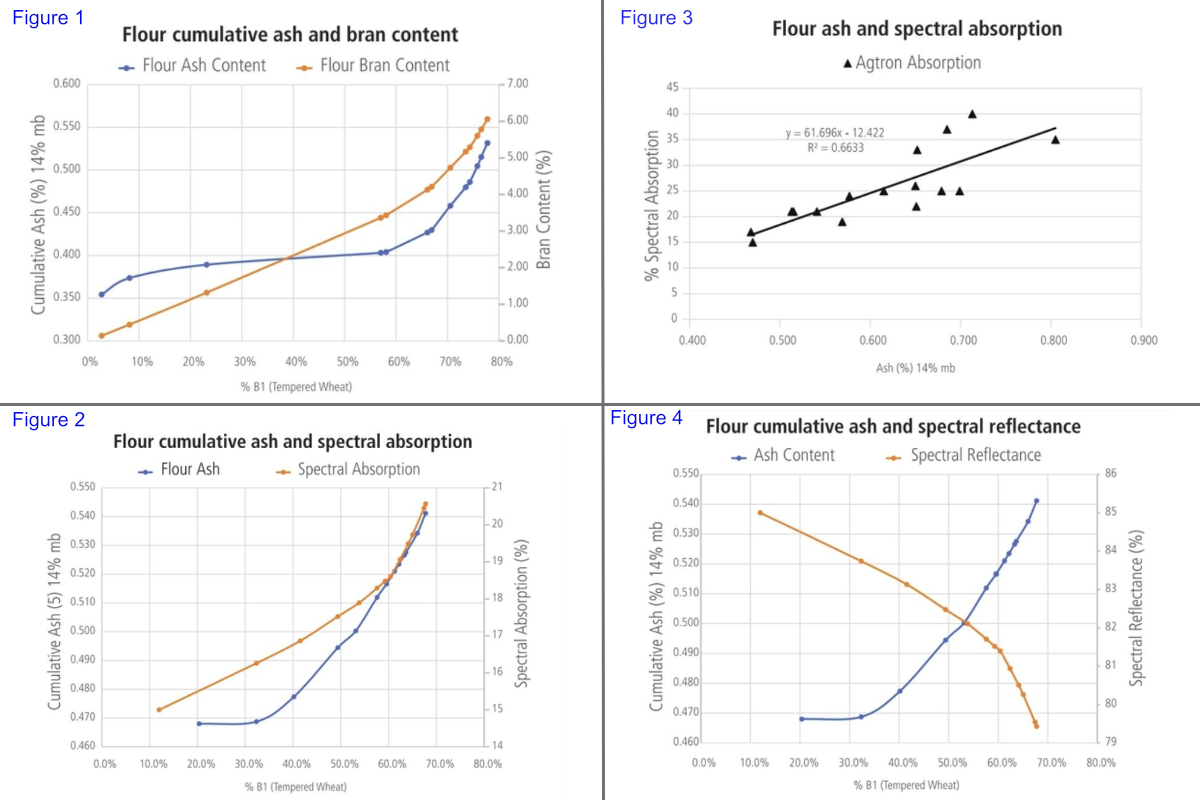
Figure 1 shows the relationship between the cumulative ash content and cumulative level of bran contamination in flour. The flour was produced using a Bühler Tandem Mill using hard red winter wheat tempered to 16% moisture content for 24 hours prior to milling. The estimated bran content of the flour was based on the ash content of pure endosperm and bran at 0.20% and 7% ash content, respectively. Increasing cumulative ash content reflects increasing percentage of bran contamination in the flour. The data represented are based on a single observation. It is likely that additional replications and actual ash contents of pure endosperm and bran ash content from the sample milled would improve curve similarities.
يُظهر الشكل رقم 1 العلاقة بين المحتوى التراكمي للرماد ومستوى التلوث التراكمي بالنخالة في الدقيق. تم إنتاج هذا الدقيق باستخدام مطحنة Bühler Tandem باستخدام قمح هارد رد وينتر (القمح الأحمر الشتوي الصلب)، بعد ترطيبه بنسبة رطوبة تصل إلى 16% لمدة 24 ساعة قبل الطحن. وقد تم تقدير محتوى النخالة في الدقيق استنادًا إلى محتوى الرماد في كل من الاندوسبرم النقي والنخالة، حيث بلغ محتوى الرماد في الاندوسبرم 0.20% وفي النخالة 7%.
يعكس ازدياد المحتوى التراكمي للرماد ازدياد النسبة المئوية لتلوث الدقيق بالنخالة. وتعتمد البيانات المعروضة على ملاحظة واحدة فقط. ومن المرجّح أن تكرار التجربة أكثر من مرة، بالإضافة إلى استخدام القيم الفعلية لمحتوى الرماد في كل من الاندوسبرم النقي والنخالة للعينة التي تم طحنها، من شأنه أن يحسّن من تطابق منحنى العلاقة ويزيد من دقته.
Figures 2-4 are based on flour produced in the early 2000s using 16% moisture hard red winter wheat tempered for 24 hours prior to milling. The tempered wheat was milled using a batch walking flow sheet procedure. Flour color was measured in dry flour samples using an Agtron M-45 Color Meter (Agtron Inc. Reno, Nevada, US).
The Agtron M-45 color meter is a direct-reading reflectance spectrophotometer designed to measure the relative spectral qualities of product samples. The machine, set on the green wave length (546 nm), is calibrated using a 67 calibration tile for the “0% Relative Spectral Reflectance” reading and a 97 calibration tile for the “100% Relative Spectral Reflectance” reading. When using the green wavelength light, relative spectral reflectance is inversely proportional to the degree of bran contamination in the sample. The higher the relative spectral reflectance the brighter (better, lower ash) the flour. Flour ash content was measured using a commercial NIR unit without benefit of stream specific calibration data and robust ash calibration, which NIR instrument manufacturers have since dramatically improved.
تعتمد الأشكال 2 إلى 4 على دقيق تم إنتاجه في أوائل العقد الأول من الألفية الثانية باستخدام قمح "الهارد رد وينتر" (القمح الأحمر الشتوي الصلب) برطوبة 16%، بعد ترطيبه لمدة 24 ساعة قبل الطحن. وقد تم طحن القمح المُرطب باستخدام إجراء مخطط تدفق دفعي متدرج (batch walking flow sheet). تم قياس لون الدقيق في عينات جافة باستخدام جهاز قياس اللون Agtron M-45 (شركة Agtron، رينو، نيفادا، الولايات المتحدة الأمريكية).
يُعد جهاز Agtron M-45 مقياس طيف انعكاسي مباشر القراءة، صُمم لقياس الخصائص الطيفية النسبية لعَيِّنات المنتجات. يتم ضبط الجهاز على الطول الموجي الأخضر (546 نانومتر)، ويُعاير باستخدام بلاطة معايرة بدرجة 67 لقراءة "0% انعكاس طيفي نسبي"، وبلاطة معايرة بدرجة 97 لقراءة "100% انعكاس طيفي نسبي". عند استخدام الضوء بطول موجي أخضر، يكون الانعكاس الطيفي النسبي عكسيًا مع درجة تلوث العينة بالنخالة. فكلما زاد الانعكاس الطيفي النسبي، كان الدقيق أكثر إشراقًا (أفضل جودة، وأقل محتوى رماد).
أما محتوى الرماد في الدقيق فقد تم قياسه باستخدام وحدة تحليل بالأشعة تحت الحمراء القريبة (NIR) تجارية، من دون الاستفادة من بيانات معايرة خاصة بكل تيار إنتاجي، ومن دون استخدام معايرة دقيقة وقوية لمحتوى الرماد، وهي جوانب قامت شركات تصنيع أجهزة NIR بتحسينها بشكل كبير منذ ذلك الوقت.
Figure 2 compares the NIR ash content and absorption of the various flour streams from the milling process. Spectral absorption was calculated by subtracting the reflectance from 100. There appears to be a reasonable relationship between flour ash content and spectral absorption. With multiple experiment or test replications combined with utilizing improved NIR calibrations or furnace ash measurement the R2 value would likely improve. The figure supports the generally well-known principle that darker flour contains more bran particles. The gradual reduction system of wheat flour milling has an opportunity for improvement.
يقارن الشكل رقم 2 بين محتوى الرماد المقاس بجهاز NIR ومعدل الامتصاص الطيفي لمختلف استريمات الدقيق الناتجة عن عملية الطحن. تم حساب الامتصاص الطيفي عن طريق طرح قيمة الانعكاس من 100. يبدو أن هناك علاقة منطقية بين محتوى الرماد في الدقيق ومعدل الامتصاص الطيفي. ومع تكرار التجربة أو الاختبار عدة مرات، بالإضافة إلى استخدام معايرات NIR محسّنة أو قياس الرماد باستخدام فرن، فمن المحتمل أن يتحسن معامل التحديد (R²).
تدعم هذه الشكل المبدأ المعروف بشكل عام، وهو أن الدقيق الأغمق يحتوي على كمية أكبر من جزيئات النخالة. ويشير ذلك إلى أن نظام الطحن التدريجي لإنتاج دقيق القمح لا يزال يحتوي على مجال للتحسين.
The relationship between flour cumulative ash and spectral reflectance is shown in Figure 3. As the cumulative ash increases the spectral reflectance decreases. Increased bran level confirmed by increased ash content results in darker flour indicated by lower spectral reflectance. The cumulative ash curve and cumulative spectral reflectance curves are nearly the inverse of each other.
As the cumulative ash content increases the spectral absorption increases and the resulting curves are similar as shown in Figure 4. Recall from earlier that Spectral Absorption was calculated by subtracting Spectral Reflectance from 100.
In making observations regarding flour streams and flour grade color it is important to keep in mind the limitations of the observation and measurement made. Changes in observations should be explored carefully before being dismissed. Is the difference in color related to endosperm ash content, bran ash content, bran ash, particle size, sample preparation for instrument measurement light source changes or human error? Who knows? Some of those changes may relate back to process operation management such as roll adjustments, unplanned or inadvertent sifter cloth changes. Pick your tools and use them wisely.
يُظهر الشكل رقم 3 العلاقة بين الرماد التراكمي في الدقيق والانعاكس الطيفي. فمع ازدياد الرماد التراكمي، ينخفض الانعكاس الطيفي. ويؤدي ارتفاع مستوى النخالة، كما يتضح من زيادة محتوى الرماد، إلى إنتاج دقيق أغمق، وهو ما ينعكس في انخفاض قيمة الانعكاس الطيفي. ومن الملاحظ أن منحنيي الرماد التراكمي والانعاكس الطيفي التراكمي يكادان يكونان عكسيين لبعضهما البعض.
ومع ازدياد محتوى الرماد التراكمي، يزداد الامتصاص الطيفي، وتكون المنحنيات الناتجة متشابهة، كما هو موضح في الشكل رقم 4. ونذكّر هنا بأن الامتصاص الطيفي تم حسابه عن طريق طرح الانعكاس الطيفي من 100.
وعند إجراء الملاحظات المتعلقة باستريمات الدقيق ودرجة لون الدقيق، من المهم أن نُبقي في أذهاننا حدود ودقة الملاحظات والقياسات المُجراة. يجب التحقق من أي تغييرات في النتائج بعناية قبل رفضها. فهل يعود الاختلاف في اللون إلى محتوى الرماد في الاندوسبرم؟ أم إلى محتوى الرماد في النخالة؟ أم إلى كمية النخالة؟ أم إلى حجم الجسيمات؟ أم إلى طريقة تحضير العينة لقياس اللون بالأجهزة؟ أم بسبب تغيير في مصدر الضوء؟ أم أنه ببساطة خطأ بشري؟ من يعلم؟
قد ترتبط بعض هذه التغييرات بإدارة عملية التشغيل، مثل ضبط رولات/درافيل الطحن، أو تغييرات غير مخطط لها أو غير مقصودة في حرير المناخل . لذا، اختر أدواتك بحكمة، واستخدمها بعناية.
Jeff Gwirtz, a milling industry consultant, is president of JAG Services Inc. He may be reached at jgwirtz@att.net.